


As the 2026 Two Sessions convene as scheduled, new energy vehicles (NEVs) have become a hot topic of discussion across all sectors. This year's Government Work Report features impressive figures: annual NEV production exceeded 16 million units, and the number of electric vehicle charging facilities surpassed 20 million, underscoring the robust momentum of China's NEV industry. Developing NEVs is the core direction of the global automotive industry's green transition, and an indispensable path for China to evolve from a major automobile producer to an automotive powerhouse.
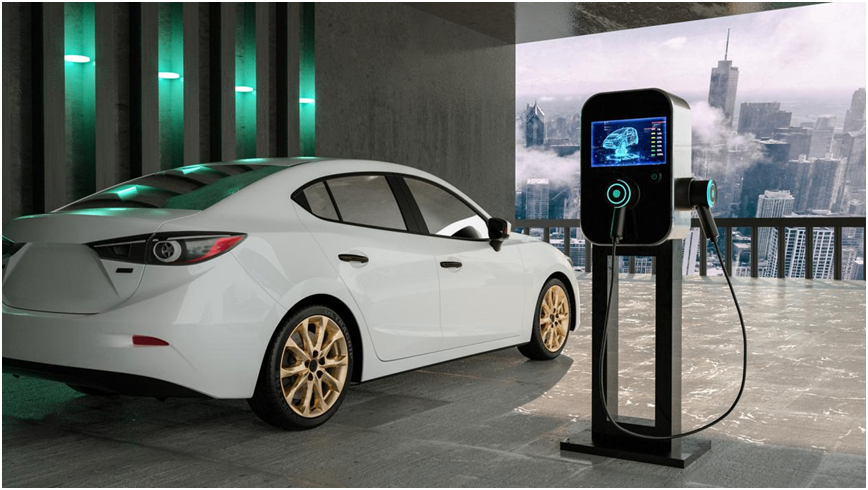
Image Source:699pic.com
Since the CPC Central Committee made the major decision to develop NEVs, the state has successively issued relevant industrial plans, leading the industry's leapfrog development. The 14th Five-Year Plan period has witnessed remarkable achievements in the sector.
First, it leads in scale with broader global layout. Production and sales have remained the world's largest, market penetration has continued to rise, and Chinese brands have accelerated their overseas expansion, forming a development pattern of mutual promotion between domestic and international dual circulations.
Second, it has achieved technological breakthroughs with improved product quality. Core technologies in batteries, electric motors, and electronic controls have continued to advance, with comprehensive upgrades in range, fast charging, and safety performance. The supporting network has become increasingly mature, significantly enhancing user experience and brand competitiveness.
Third, it empowers the industry with more prominent strategic value. The rapid growth of the NEV market has driven the coordinated upgrading of upstream and downstream industrial chains, fostered new quality productive forces, provided important support for stabilizing growth, promoting transformation, and reducing carbon emissions and pollution, and solidified the foundation for building a manufacturing powerhouse.
Although we have achieved great progress, we still face many challenges. China’s new energy vehicle industry has developed rapidly, but it still has problems like a shortage of high-end auto chips and unfair competition. As we begin the 15th Five-Year Plan, to push the high-quality development of the new energy industry, we need to take many measures and make systematic policies.
We must strengthen technological breakthroughs to consolidate the foundation of self-reliance. Focusing on key areas such as high-computing-power automotive-grade chips, all-solid-state batteries, and high-level autonomous driving, we will increase R&D investment and policy support, break through bottleneck technologies, and enhance the self-control capability of the industrial and supply chains.
We must regulate competition order and optimize the development ecosystem. Improve industry supervision mechanisms, strengthen price monitoring and quality supervision, curb disorderly competition and low-price internal friction, guide enterprises to compete in technology, brand, and service, and build a market environment of high quality and reasonable prices.
We must improve infrastructure layout and enhance service efficiency. Coordinate the construction of charging piles, battery swap stations, and hydrogen refueling stations, unify technical standards, strengthen facility safety supervision, promote urban-rural coverage and efficient interconnection, and address pain points in vehicle usage.
We must deepen integrated innovation and expand development tracks. Accelerate the deep integration of new energy with intelligence and connectivity, lay out new tracks such as flying cars and hydrogen fuel cell vehicles, and cultivate new quality productive forces.
We must expand opening-up and cooperation to enhance global influence. Improve the compliance service system for overseas expansion, promote the alignment of Chinese standards with international ones, shift from product export to technology, standard, and brand export, and steadily expand the global market.
During the Two Sessions, deputies and members have offered suggestions and advice, pooling wisdom for the high-quality development of the NEV industry. NPC Deputy Zhu Huarong proposed accelerating the revision of road traffic safety laws and regulations, clarifying liability definitions, and facilitating the large-scale commercialization of high-level autonomous driving; NPC Deputy Feng Xingya put forward building a national unified standard and evaluation system for intelligent connected vehicles and liberalizing commercial operations in core scenarios; CPPCC Member Li Shufu suggested promoting methanol-electric trucks and building a green energy supply network to support the low-carbon transition in the transportation sector; NPC Deputy Yin Tongyue proposed coordinating data security and compliant use of intelligent driving, accelerating the mass production and deployment of high-level intelligent driving, and providing all-round support for the healthy and sustainable development of China's automotive industry; NPC Deputy He Xiaopeng suggested promoting the leapfrog development of autonomous driving policies from L2 to L4, simplifying intermediate links, and improving regulations and pilot mechanisms.
The sea is wide enough for fish to leap; the sky is high enough for birds to fly. 2026 marks the start of the 15th Five-Year Plan. Standing at a new historical starting point, China's new energy industry embraces greater development opportunities. By pooling the combined forces of policies, industries, and society, solving development challenges, and fostering development advantages, we will surely promote the steady and long-term development of the NEV industry, accelerate the building of an automotive powerhouse, and contribute more Chinese wisdom and strength to the global green and low-carbon transition.